Economic Development
Vision
The Town of Newmarket should work to retain and support its current businesses, while providing opportunities for economic growth and activities which will strengthen the Town’s economic base, provide employment for residents, and enhance its position in the regional economy.
Vibrancy
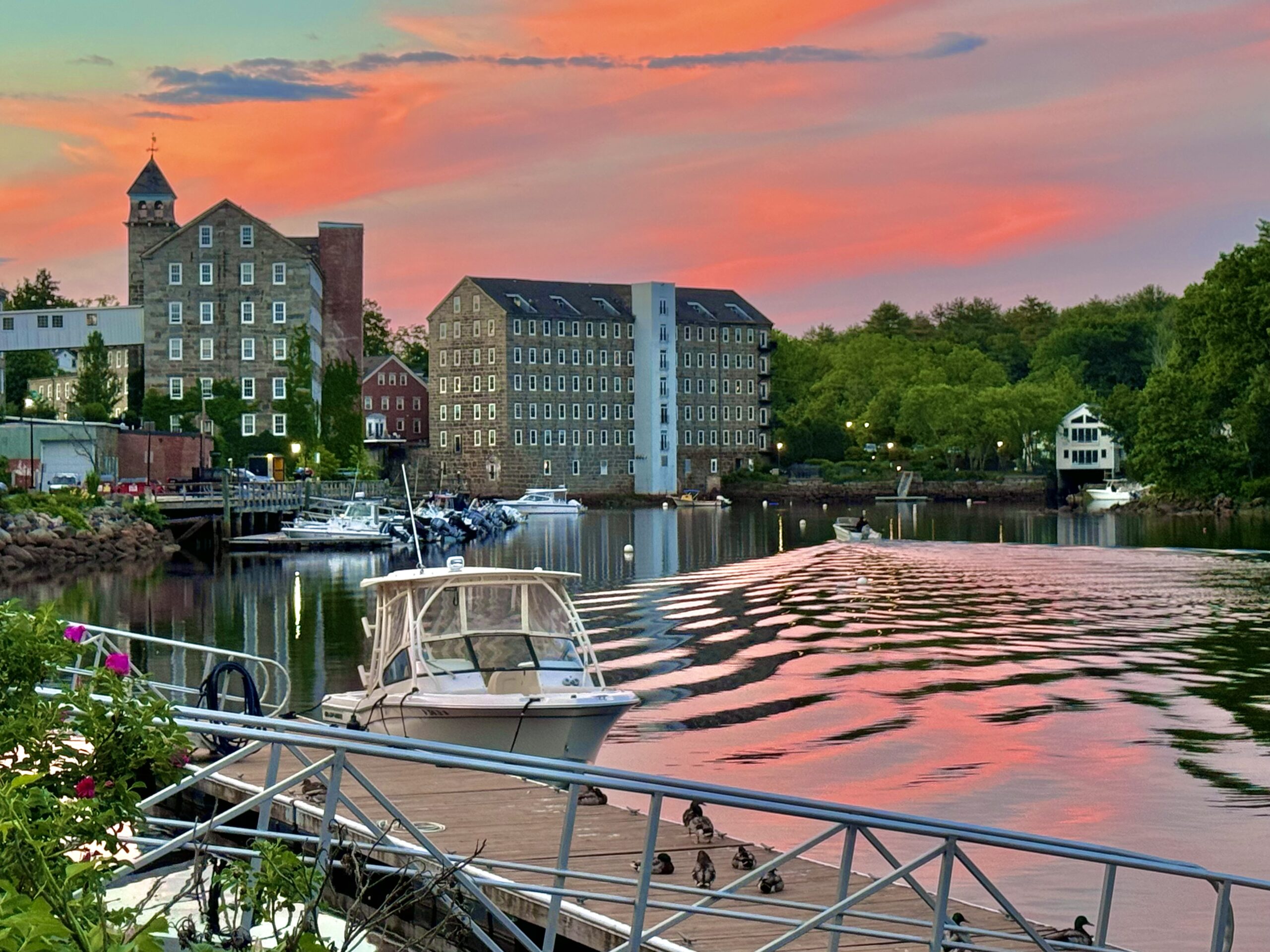
A vibrant community is one that exudes energy and is full of activity and life. It is welcoming and friendly to all ages, supports cultural diversity, and provides economic opportunities.
For economic development in Newmarket, “vibrancy” means creating a lively and diverse atmosphere throughout Town where a mix of businesses like retail, restaurants, and professional services can thrive while drawing in and meeting the needs of both locals and visitors. A diverse mix of businesses that are aligned with the unique and quaint character of Newmarket will help ensure that the area is active year-round, offers a variety of employment opportunities, and fosters spaces for community members and visitors to mingle and socialize. Achieving vibrancy also includes a business community that is invested in revitalization efforts, involved in community decisions, leads by proactive example, and is supported by municipal policies and community investments.
A vibrant community is comprised of a diverse range of businesses that not only cater to, but also provide, employment opportunities for people of all ages and skill levels.
Working towards a vibrant economy includes promoting a diverse business sector, skilled workforce, strong entrepreneurial activity, and a culture of inclusion where people from all backgrounds have opportunities to participate and contribute to economic growth.
Understanding the composition of the Town’s population, including the population’s skills and age composition, as well as consumer behaviors, community feedback, and needs and wants of residents can provide key insights to understanding the types of businesses, services, and industries the Town should seek to attract to the community. See Appendix A for further discussion about Newmarket’s population trends.
Beyond ensuring that efforts to attract businesses can focus on industries and services that align with the community’s preferences and skills, understanding community members’ wants can ensure these businesses will be economically viable. The community survey conducted in late summer/early fall 2024 indicated that while the majority of respondents wished to see a more affordable mid-sized grocery store, more retail and specialty shops, and more affordable and varied food and drink establishments (such as restaurants that offer outdoor seating, food trucks, or a restaurant by the water), other popular mentions included more places for kids and teens, more entertainment, and a medical dispensary. Many respondents also mentioned wanting to see more “third spaces”, or places outside of work and home where the community can gather (e.g. bookstores, coffee shops, picnic areas by the Lamprey River, etc.).

Maintaining the unique character of Newmarket.
In addition to attracting the types of businesses the community needs and wants, a priority for the Town is to ensure they match the unique character of Newmarket. When asked what vibrancy means in terms of economic development during the community workshop in the fall of 2024, attendees expressed wanting slow, intentional growth while maintaining a small town feel and welcoming environment, and there was little appetite for big box or national retailers. In the downtown core, for example, this may be accomplished by implementing a Form Based Code to create more density while maintaining and enhancing its quaint character, and avoiding large parking lots from being directly on Main Street to avoid fragmentation of street life. To increase vibrancy while maintaining Newmarket’s small-town character, there are also opportunities for the Town to explore designating and allowing public areas dedicated to “kiosk-type” or “pop-up” businesses, where food trucks and other vendors can come together to provide goods and services during designated periods of time, and can be complemented by live music and other community activities (this would also allow for more affordable overhead costs for start-ups and small entrepreneurs).

Enhancing visitor access to support existing businesses and economic activity.
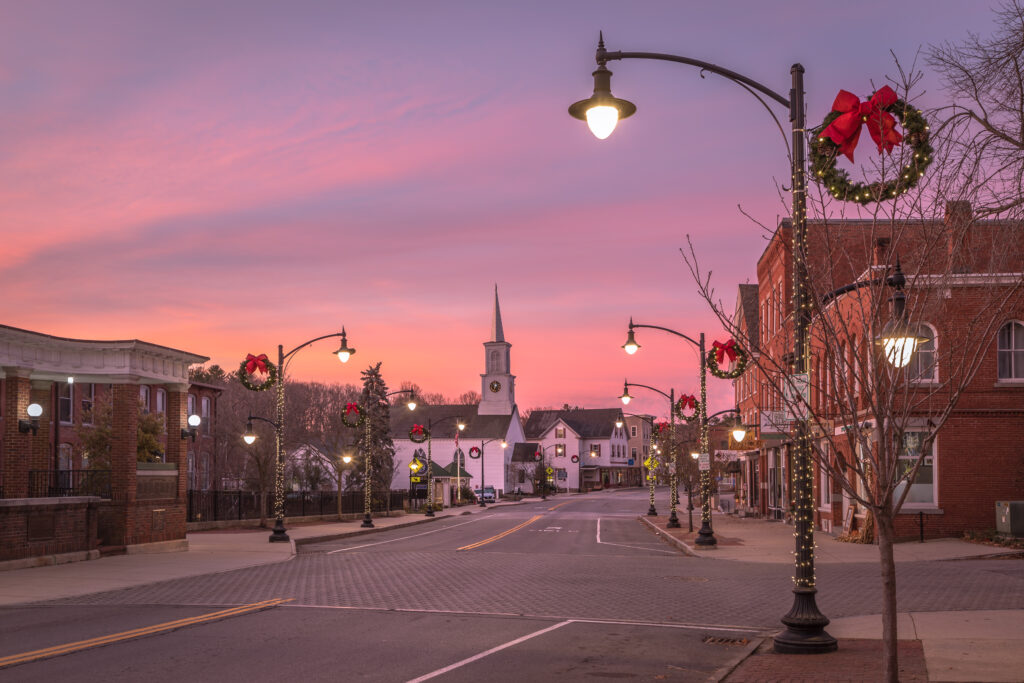
Enhancing visitor access is a crucial component to achieving and maintaining a vibrant downtown core, supporting existing businesses, economic activity, and a community atmosphere year-round. In the community survey, respondents indicated that they believe one of the top three challenges to economic development in Newmarket was low visitor access, something that is particularly evident in the winter months. To achieve this, it is a priority for the Town to explore ways to make public spaces more inviting year-round. This may include fortifying public-private partnerships between the Town and business/property owners to implement beautification efforts, improving lighting in public spaces, creating a safer, more walkable environment, improving signage and placemaking, and improving public access to and from the riverfront (see implementation matrix for more details). Pedestrian traffic count studies, which can be conducted by Regional Planning Commissions, can help the Town and businesses track and analyze visitor patterns in a designated area (e.g. the riverfront or downtown), which can help them make informed decisions regarding the best ways to attract visitors and clients year-round.
Parking is also a vital necessity when thinking about attracting year-round visitors to Town. The number one challenge to economic development in Newmarket identified by survey respondents and through one-on-one interviews with business owners was, by far, parking. While parking on Main Street remains limited, the Town has 466 total spaces (with 180 public spaces that are not reserved for specific businesses, permits, or vehicles) that can be used to accommodate visitors and residents. Marketing the availability of parking to visitors and encouraging owners and workers to use public lots (vs. on-street parking) is a small step that can have an immediate impact on helping alleviate some of the parking pressures and invites year-round visitor access.
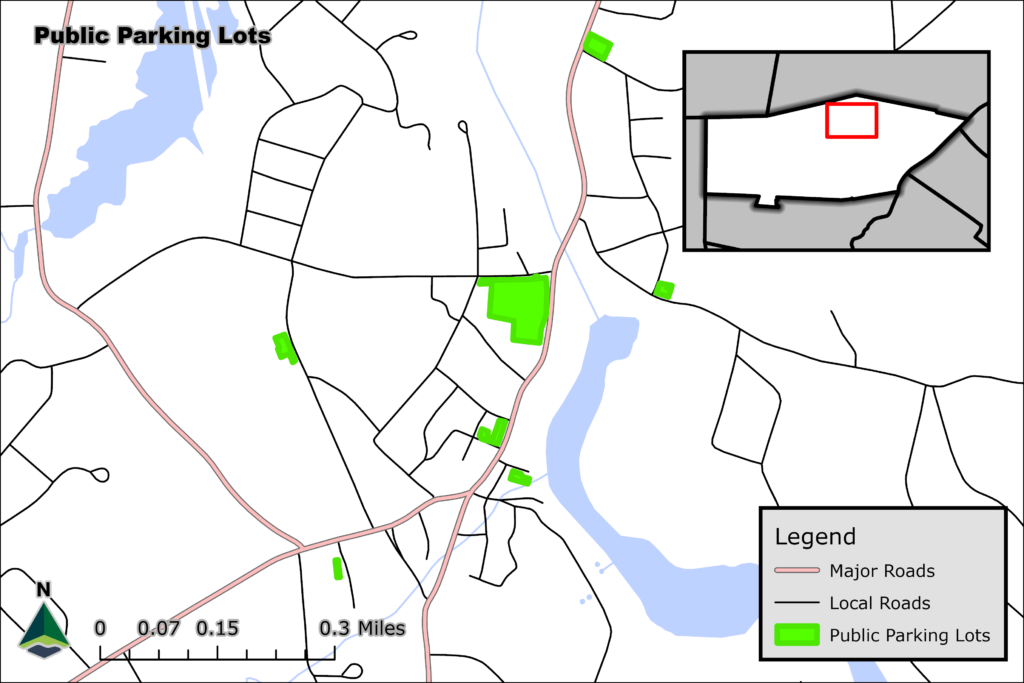
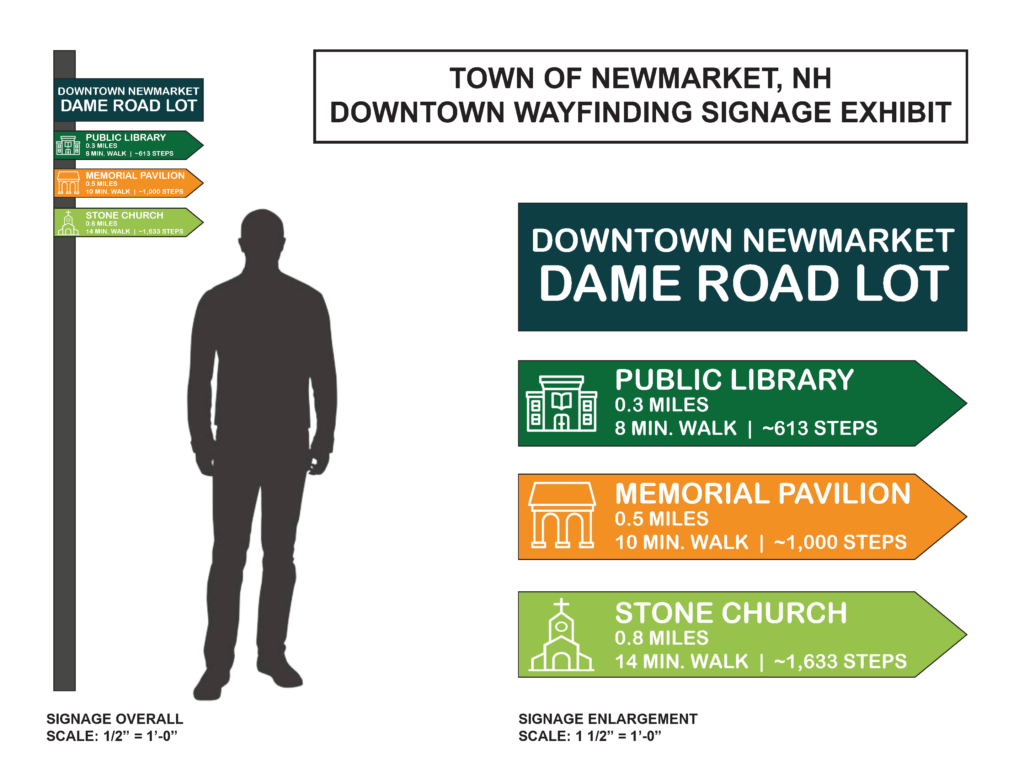
As discussed in the Downtown Riverfront Chapter, using creative signage and wayfinding at the site of each lot to promote the various businesses, as well as the Town’s natural resources, cultural points of interest, and arts and civic spaces can help guide and incentivize locals and visitors to use the public parking spaces while promoting businesses and amenities that the Town has to offer.
Given Newmarket’s assets, there are opportunities for recreation, arts, and culture to become year-round economic drivers for the Town. Engaging in marketing efforts can also help promote these community assets, including a historic, quaint mill town with Main Street businesses and food establishments, proximity to the Lamprey River, and various outdoor recreation, cultural, and community events and opportunities. Beyond the downtown core, enhanced marketing can also be used to promote the availability of commercial and industrial spaces throughout Town, as well as different incentives for development and the revitalization of underutilized and or/undeveloped spaces.
Exploring partnership opportunities with community and economic development organizations.
Exploring partnership opportunities with community organizations can encourage a strong sense of community and allow for new opportunities to help advance the goal of maintaining and enhancing vibrancy in the community, therefore increasing economic activity. As discussed in the Arts, Culture, & Historic Resources Chapter, there are several well-established organizations at the local, regional, and state level that work towards creating a more vibrant place in Newmarket and beyond. Organizations to explore, maintain and/or increase collaboration with include:
- Newmarket Main Street Corporation
- Lamprey Arts and Cultural Alliance (LACA)
- Newmarket Community Development Corporation (NCDC)
- Newmarket Heritage and Cultural Center Committee, (NHCCC) – subcommittee of LACA
- Newmarket Business Association (NBA)
- Strafford and Rockingham Regional Planning Commissions
- UNH Cooperative Extension
- NH Department of Business and Economic Affairs
- Seacoast Small Business Development Center
- NH Small Business Administration
- Apprenticeship NH
- Newmarket Ats, Culture and Tourism Commission
Beyond that, Newmarket’s diverse population allows for an active and engaged community, involved in many volunteer and engagement opportunities that contribute to the enhancement of the Town.
A vibrant community prioritizes the continued maintenance, investment, and enhancement of the downtown and other areas around Town that allow for economic opportunity.
The maintenance, investment, and continued enhancement of infrastructure in the Downtown and other economic nodes throughout Town is another essential component to maintaining the Town’s vibrancy while contributing to its tax base. Over a decade ago, thanks to a combination of municipal and state funding, and innovative efforts through the Community Revitalization Incentive Zone District under NH RSA 79-E and Tax Increment Financing (TIF) districts, Newmarket underwent a $6.8 million revitalization project that included major improvements to Newmarket’s Business District, including the replacement of water, sewer, and drainage facilities, the removal of overhead wires, installation of new lighting and underground utilities, new sidewalks, crosswalks, landscaping, and streetscape improvements. While the Town has come a long way to preserve and revitalize the overall infrastructure and aesthetics of town, the continued investment in the enhancement, maintenance, and investment of town continues to be a priority. In the community survey, when asked to rank which actions people believed will promote the worth and enhancement of Newmarket’s downtown businesses, the number one answer was “investing in the maintenance and enhancement of downtown’s built environment”.

The development of areas suitable for new businesses, or business expansion, is also key to promoting economic vibrancy. Other areas to leverage that can allow for economic growth include the “Gateways”, or areas of economic opportunity. In 2019, the Arnett Design Group, LLC (ADG) was hired by the Town of Newmarket to conduct a “Gateway” study. The main goals of this study were to 1) clarify the Town’s major gateways, 2) identify issues that may impact future development within each gateway, and 3) outline an action plan that will enhance positive development opportunities within each gateway. As a result of this study, three Gateways were identified: the North Gateway, West Gateway, and South Gateway.
Given the pivotal role that the implementation of economic development tools such as TIF districts and the NHA RSA 79-E tool had on the success of revitalizing Newmarket’s downtown area, the Town might consider replicating this strategy to help catalyze infrastructure improvements within other areas across Town identified as good candidates for commercial development (such as the proposed Gateways), bringing these areas to their maximum potential. Continued utilization of these economic development tools will help enhance vibrancy throughout the entirety of Town by ensuring that available business and industrial sites are easily accessible for business growth and expansion, transportation infrastructure is adequate, and other infrastructure like water, sewer, and fiber optic broadband are modernized and available.[1] Furthermore, the Town can also support this effort by studying an extension of sewer infrastructure to the identified Gateways, allowing them to outline an action plan to enhance future development within each area.
Other resources and tools that Newmarket can explore to encourage businesses to expand in -or relocate to – Newmarket include:
- Economic Revitalization Zones and Opportunity Zones
- Community Development Block Grants
- USDA Rural Development Grants
- Brownfields Program
- EPA Technical Assistance Programs
Enhancing and promoting the Town’s access to natural resources and proximity to the Lamprey River can also help promote vibrancy in the community.
The Lamprey River and Great Bay Estuary are unique natural resources which should not be overlooked for their economic values. The Lamprey River corridor is a diverse extensive wildlife habitat, with a number of endangered and threatened bird species and picturesque scenery with small rapids and falls in wooded areas. A portion of the river is protected under the federal Wild and Scenic Rivers program of the National Park Service and the entire river has been designated for protection under the New Hampshire Rivers Management and Protection Program by the NH Legislature.
[1] As of 2024, 0.3% (or 15 out of 4,666) addresses in Newmarket were not serviced by broadband. Source: NH BEA Broadband Mapping Initiative

As discussed in eh Open Space Plan and the Land & Water Conservation Chapter, the river and its estuaries provide endless opportunities for outdoor recreation, including canoeing, fishing, swimming and tubing. Trails for hiking, jogging and cross-country skiing can be found along the river on town-owned lands, and scenic, natural, and historic sites along the way provide educational and recreational opportunities for all.
Promoting the Town’s natural resources is an important strategy for attracting new business. Many companies seeking to re-locate to an area have cited “quality of life” factors, such as trails, green space, parks, conservation lands, and recreation areas as reasons to locate in a particular place. It is important for the Town to turn these assets into a focal point, “trademark” and source of civic pride in positioning the community for economic development.
Supporting and Enhancing the Town’s Industrial Base
Newmarket’s industrial base, located within the town’s industrial park and other areas in the community, provides valuable contributions to employment and innovation in the town. Supporting these areas through robust infrastructure, opportunities for thoughtful growth and expansion, and developing an environment suitable for industrial activities will strengthen the community’s economic vibrancy.
Vibrancy Goals
- Support the development and retention of a diverse mix of businesses, including retail, restaurants, services, creative enterprises, and industry, that reflect Newmarket’s unique character and history, and contribute to a robust, year-round economy.
- Foster a business community that is actively engaged and invested in revitalization efforts, contributes to placemaking initiatives, and collaborates with the Town.
Connectivity
A connected community has efficient and safe links to daily needs such as between home, jobs, shopping, school, services, services, parks and open space, and provides welcoming and inclusive public places for social interaction.
For Economic Development in Newmarket, connectivity means making the Town more accessible and easier to navigate for everyone. This means creating open spaces and connecting them with networks of trails and parks, while planning for better parking infrastructure to handle increased traffic from community events and businesses. It is important to ensure that daily services and jobs are within reach, with safe options for walking, biking, and convenient parking to encourage more people to visit the downtown core of the community and key community and public facilities. Moreover, connectivity refers to improving the physical connections and geographies within town and regionally that help achieve the economic development goals laid out in the master plan.
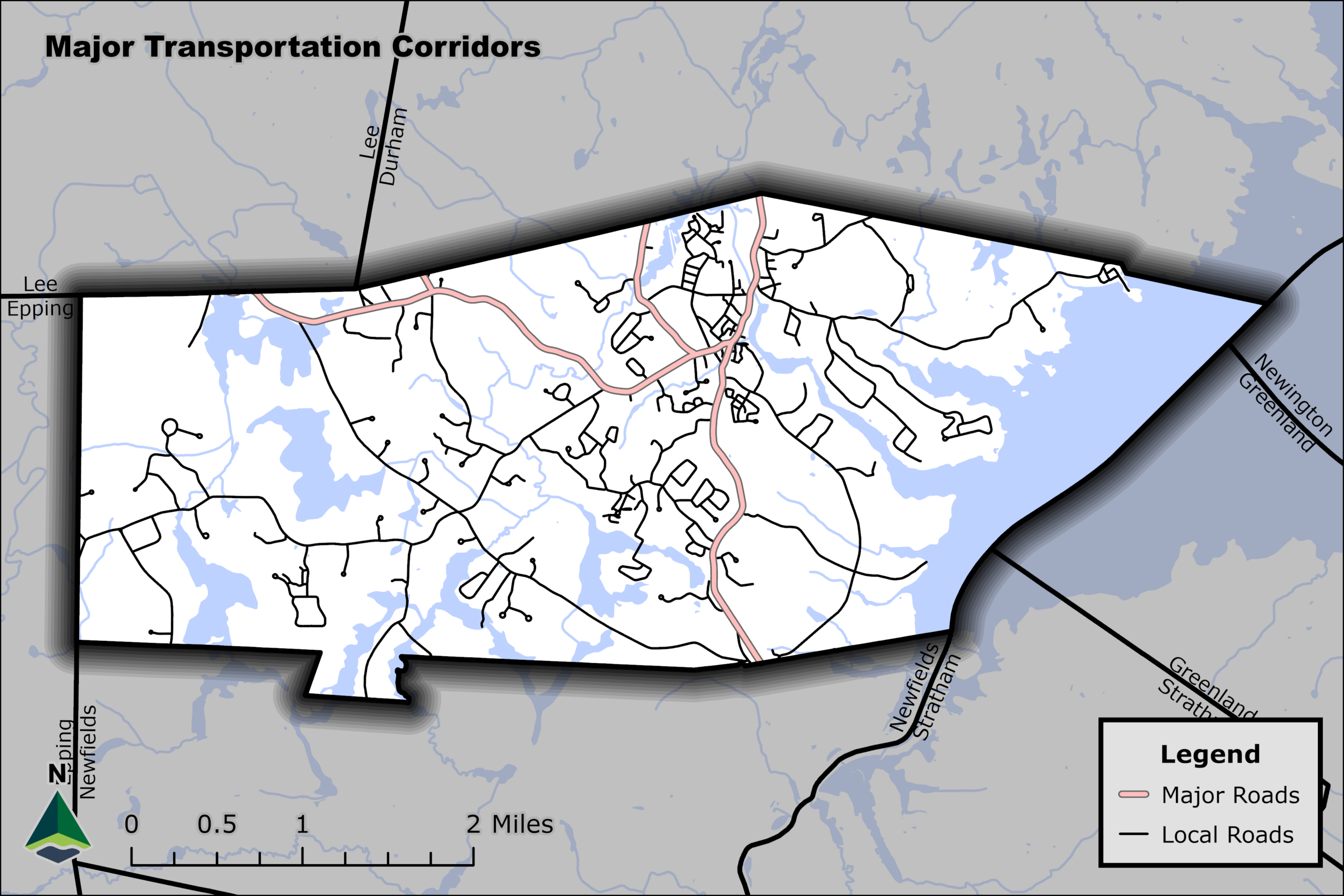
This includes planning improvements around the public right of way, transit infrastructure, walkability & bike-ability, trail and open space network, and regional transportation and connectivity, all aimed at improving economic growth and activity. This also means focusing on creating an environment where all residents, regardless of ability, can fully participate in the community.
This involves setting development standards that prioritize ADA compliance, helping ensure that both businesses and public spaces are welcoming and easy to navigate for everyone. Located equidistant between Boston, MA and Portland, ME (roughly one hour away from either city), Newmarket is a community that offers small-town charm with access to some of the country’s major urban centers. It benefits from having good infrastructure, such as public roads, and having access to major arterials such as NH routes 108 (Main St), 152 (S Main St), 4, 101, 125, 33, and the interstate system (I-95), and is within close proximity to the University of New Hampshire in Durham (5 miles north), the Manchester-Boston Regional Airport (35 miles west), the Port of New Hampshire (17 miles east), as well as the airport at Pease International Tradeport (13 miles east).
According to Longitudinal Employer-Household Dynamics LODES data from the US Census Bureau, in 2021 roughly three quarters of the town’s labor force lived in Newmarket and worked elsewhere, about 6% both live and work in Newmarket, and about 18% live outside but worked in Newmarket.
Furthermore, those visiting and residing in Newmarket benefit from easy access to the Lakes Region, the White Mountains, and the beaches of New Hampshire. However, the Town’s location can also be seen as somewhat of a liability give that its location is also somewhat “off the beaten path” compared to other similar communities nearby that benefit from easier, more direct access to I-95 and that also benefit from direct public transit connections to places like Boston and New York City. For instance, the C&J Bus, which connects passengers to Boston, NYC, and the Logan International Airport has its nearest station in Portsmouth, and Amtrak, which connects to Boston, NYC, and beyond has its nearest passenger stations in Durham and Exeter.
Making the Town more regionally connected can help generate economic activity.
To improve Newmarket’s position regionally, an important step towards promoting economic growth is identifying opportunities in which Newmarket can become more accessible to nearby markets and other communities in order to capitalize on business opportunities, labor force, jobs, visitors, and consumers. For instance, given that Amtrak’s passenger and freight rail corridor currently runs through town, there could be an opportunity to capitalize on the infrastructure that is already in place by adding a station in Newmarket to help the town become more regionally accessible. Moreover, exploring the demand for transit links within town, between Newmarket’s various economic nodes, and to jobs and workers in adjacent communities, can lead to an increase in regularly serviced and more frequent bus routes, further improving connectivity.
Newmarket’s population is highly skilled in a variety of different industries, and enhancing connectivity between the Town and other employment centers, such as Boston (education, financial, professional, and banking), Durham (education), Dover (healthcare, insurance), Exeter (healthcare, education), and Portsmouth (Naval Shipyard, professional services, retail, and tourism), can support access to jobs and expand employment opportunities for residents. Data shows that in 2022, out of the 5,564 jobholders in Newmarket, the major fields for Newmarket residents included Health Care and Social Assistance, followed by Educational Services, Retail Trade, Manufacturing, and Professional, Scientific, and Technical Services. Note: this data represents jobs held by Newmarket residents regardless of where they worked, which could be in Newmarket or anywhere else in the country.
Furthermore, there were 1,640 jobs in Newmarket in 2022. Top industries included Education Services and Health Care and Social Assistance, each with over 200 jobs. Other large industries with 100-200 jobs included Construction, Accommodation and Food Services, Professional, Scientific, and Technical Services, Retail Trade, and Public Administration. In addition to attracting new businesses, improving connectivity can also support the expansion of these top industries.
Moreover, given the low unemployment levels in Newmarket (1.7% in 2023; lower than the State’s, Rockingham County’s, and Strafford County’s unemployment rates), it can be hard for businesses in town to attract workers and fill positions. Improving connectivity at a regional level can help with workforce attraction and retention.
Improving connectivity can help support business growth and expansion within Town.
Beyond regional connectivity, improving connectivity within the Town can help enhance economic activity, consumer spending, and access to jobs in the various economic nodes including downtown and beyond.
Connecting downtown to natural resources
The proximity of Newmarket’s downtown to valuable natural resources that make the Town so unique allows for new opportunities to leverage these resources, which can lead to increased visitor access and spending. Improving connectivity between downtown businesses, existing trail networks, the Riverfront, and Heron Point can help attract visitors and increase access for residents, eventually bringing more customers and economic activity for the businesses downtown. Outreach and community engagement efforts have shown that there is interest in exploring a potential footbridge connection between the Riverfront/downtown and Heron Point making it an extension of downtown. A cost and feasibility study conducted by the Town can help explore this as a potential project for the future. Beyond leveraging natural resources and improving connectivity between conservation spaces and businesses, it is important to market these resources regionally to help attract visitors and consumers.
Connecting public parking lots to Newmarket’s businesses, services, and natural, cultural, and civic spaces
In response to the sentiments towards parking expressed by business owners and the overall community, one of the Town’s priorities is to analyze its current parking capacity and explore long term infrastructure solutions to address these concerns (e.g. by conducting a parking analysis that assesses the Town’s current parking capacity and develop a long-term parking strategy that considers options such as developing a Parking Capital Reserve Fund). However, as part of a more immediate solution to address this challenge, beyond clearly identifying and promoting existing public parking lots (discussed in the Vibrancy section above), improving connectivity between these lots and other points of attraction, including main street businesses, can help alleviate parking pressures and lead to increased visitor and consumer access. Creating marketing materials that can be shared widely across the community and with businesses that clearly identify and inform users of existing public parking lots is crucial to ensuring people are aware of parking availability and that the lots are being used. (See Portsmouth Parking Locations Map and Pricing as an example).
This initiative would also involve identifying clear paths to and from existing public parking lots to downtown and identifying enhancements that can be made to make it a safe, pleasant, and enjoyable walk that encourages people to use the existing lots.
Connecting residential neighborhoods to downtown
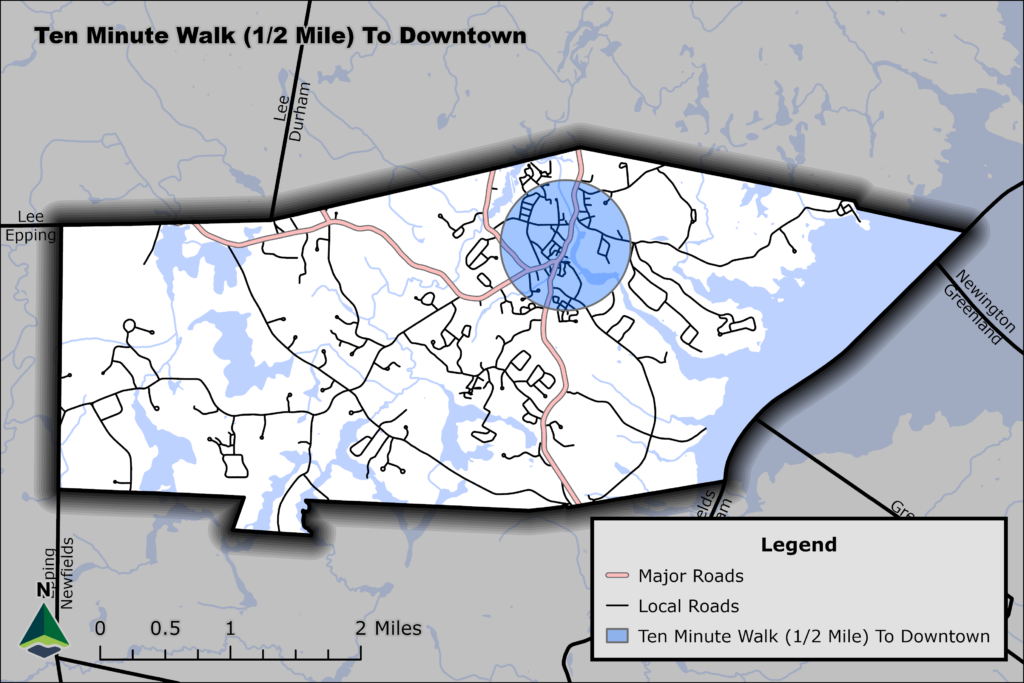
The latter can also be applied to pedestrian connections between nearby residential neighborhoods and downtown. As of 2020, there were approximately 3,700 people living withing a half mile (average 10-minute walk) from downtown, as shown in the map below.[1] Creating and promoting safe, walkable paths by analyzing development opportunities for new pedestrian pathways and existing sidewalk enhancements can help connect nearby residents to main street businesses and services. In addition to fostering a more walkable community and promoting visitor access to businesses, this would also help alleviate some of the downtown parking pressures. As part of this effort, it is crucial to identify hazardous locations for pedestrians and cyclists and take steps needed to improve safety and increase usability.
[1] Note: The 10-minute walk analysis does not take into account infrastructure, such as sidewalk or street availability. It assumes a straight line from any point to Main Street, so walk times might be higher. Furthermore, the analysis assumes an even distribution of population and does not account for the specific locations of housing structures.
Improving connections to and from the town’s economic nodes
Moreover, improving connectivity to and from the Town’s available business and industrial sites (Route 108 Corridor, Route 152 Corridor, the Newmarket Industrial Park, and the identified Gateways) can promote the attraction and expansion of new and existing businesses and industries, while also improving access to jobs and workers.
Enhancing connectivity through public-private partnerships.
Partnering with private and public entities can help the Town move towards achieving its connectivity goals. For instance, a partnership with the Newmarket Conservation Commission, whose members have worked to establish a vision for the Town’s trail systems[1], can be enhanced to leverage existing and new conservation areas, and establish a pedestrian trail system that aligns with their vision and interconnects existing trail networks that also lead to the businesses downtown. Moreover, partnering with private businesses can help fund wayfinding efforts and market parking availability, and partnerships with other establishments, such as the Newmarket Business Association or Newmarket Recreation can lead to innovative solutions to address some of the parking challenges, such as providing a low-cost or free shuttle to improve connectivity between lots and the downtown during civic and cultural events.
Connectivity Goals
- Improve local and regional transportation, trails, and parking to better connect residents, visitors, jobs, and community spaces.
- Ensure that development prioritizes inclusive design to make public and commercial areas accessible for all.
[1] See Conservation Commission’s Pathways for People and Nature
Accessibility
For economic development in Newmarket, promoting accessibility means improving the social infrastructure and economic conditions that catalyze economic development in the Town. This includes business and workforce training resources, educational and information resources, and public-private partnership initiatives that can help support the overall business environment in Town. Improving digital infrastructure is also key to accessibility for economic development. The goal is to foster an environment that is supportive of business activity and welcomes participation from diverse groups in the local workforce and community overall.
Enhancing public-private partnerships to better support the business community in Newmarket.
A survey conducted in the spring of 2025 showed that business owners generally feel like one of the biggest areas of opportunity to establishing, owning, operating, or expanding a business in Newmarket relates to its “community”. People expressed that due to the size and friendly, welcoming nature of the Town, there are many opportunities to connect with community members, organizations, and leaders on a direct level. Given this strength, there is an opportunity for the Town to leverage this asset, such as by establishing a centralized economic development function (e.g. an Economic Development Planner) that services businesses and strengthens the relationship between public and private entities, supporting current business operations and encouraging potential growth, expansion, or relocation in Town. A few highlights that came from the various outreach and engagement efforts regarding how the Town can increase business support, all of which could be supported through the work of a centralized economic development function, included:
- Maintaining and promoting a centralized business directory that provides up-to-date information on current businesses
- Balancing commercial space growth while maintaining Newmarket’s small-town, unique character through Zoning and Land Use regulations
- Addressing current barriers to economic development, such as high rents, parking, and affordable housing for the workforce
- Supporting business networking opportunities (career fairs, business fairs, ribbon cuttings, open houses, after-hours mixers)
- Identifying and establishing a plan to grow a few specific focus areas, such as startups, inexpensive business incubators, food, outdoor recreation, tourism, or the arts
- Expanding high speed internet opportunities
“There is a growing pool of self-employed artists, authors, photographers, and other small LLCs that tend to get lost in the conversation and efforts to connect to networking resources due to the high costs of rents and living, and the cost of dues for some local networking groups…”
Newmarket Business Survey Respondent
Moreover, enhancing relationships with economic development organizations (see Appendix for a list of organizations) at the local, regional, and state level can help support existing and potential businesses in Town and increase visibility of Newmarket businesses at a regional level to attract visitors, customers, and new industries.
Increasing workforce support through networking and education.
Matching worker skill sets to growing industries can also help increase job accessibility. Employment projections for the Strafford Region[1], which includes Newmarket, show that the biggest decline in the number of employees through 2030 will be seen in the Retail and Trade, General Merchandise Stores, Food and Beverage Stores, and Plastics and Rubber Products Manufacturing industries.
Meanwhile, the biggest increases in the number of employees are expected to be seen in the following industries, all of which are projected to experience an increase of 200 or more employees
| Code | Industry | 2020 Estimated Employment | 2030 Projected Employment | 2020-2030 Numeric Change | Percent Change |
|---|---|---|---|---|---|
| 611300 | Colleges, Universities, and Professional Schools | 3,710 | 3,944 | 234 | 6.30% |
| 810000 | Other Services (Except Government) | 2,337 | 2,592 | 255 | 10.90% |
| 624000 | Social Assistance | 1,089 | 1,367 | 278 | 25.50% |
| 541500 | Computer Systems Design and Related Services | 1,648 | 2,019 | 371 | 22.50% |
| 611000 | Educational Services | 7,892 | 8,342 | 450 | 5.70% |
| 621000 | Ambulatory Health Care Services | 2,934 | 3,421 | 487 | 16.60% |
| 541000 | Professional, Scientific, and Technical Services | 2,869 | 3,358 | 489 | 17.00% |
| 620000 | Health Care and Social Assistance | 7,427 | 8,423 | 996 | 13.40% |
| 722000 | Food Services and Drinking Places | 3,827 | 4,956 | 1,129 | 29.50% |
| 720000 | Accommodation and Food Services | 4,129 | 5,360 | 1,231 | 29.80% |
| 102000 | Service-Providing Industries | 43,784 | 47,730 | 3,946 | 9.00% |
Notably, the three industries expected to grow the most are related to service and hospitality, which can largely be comprised of a labor force with entry-level skills. While Newmarket’s highly educated workforce allows for more employment opportunities, it may leave some gaps to be filled in essential entry-level positions. This highlights the importance of helping ensure that the people who work here can also live here, which can be accomplished by supporting essential amenities (such as affordable housing) that are supportive of an overarching labor force, comprised of people of all incomes, skill levels, and backgrounds.
In addition to supporting the workforce through essential actions such as expanding access to affordable housing, it is important to explore ways to increase training and skills to help employees access jobs in the various growing industries which are expected to see rising demand for employees in future years, such as health care and social assistance, professional, scientific and technical services, and educational services. Partnering with educational institutions, such as UNH, Great Bay Community College, and Apprenticeship NH can lead to potential job and skills fairs, as well as access to a pool of potential job candidates, that can help support this goal.
Addressing affordability to increase accessibility for potential new businesses looking to establish or expand operations in Newmarket.
Addressing affordability is a necessary step to support entrepreneurship and increase accessibility for potential new businesses looking to establish or expand operations in Newmarket. Due to limited space availability and high rents, the cost of establishing a new business in Town can be a major obstacle, especially for start-ups and entrepreneurs. Finding an approach to creating small, affordable incubator spaces for new and small that are trying to get established is an important step to address this challenge. See more on this in the “Affordability” section below.
Improving accessibility through entrepreneurship, technology, and digital equity infrastructure.
Due to Newmarket’s close proximity to University of New Hampshire (UNH), many university faculty, students, and staff visit, live, or work in Newmarket. The University has programs and services from student projects to technology and research programs that might directly benefit Newmarket and be instrumental for local business development.
One of the offshoots of such research and technology transfer is the opportunity to establish small businesses that have identified a particular market niche and need space and support to get the business “off the ground”. Newmarket’s proximity to UNH and its vacant mill space provide great opportunities for such businesses. By providing “incubator” space, some may have the support necessary to establish viable businesses.
Moreover, in 2023, the UNH Cooperative Extension (UNHCE) developed a 5-year plan, known as the NH Digital Equity Plan, aimed to connect NH residents with access to high-speed internet, digital devices, training, and the services and resources made possible through digital technologies. In addition to bridging the digital divide through the improvement of physical infrastructure, such as gaps in broadband availability, the plan emphasizes the need for digital equity programs aimed at educating individuals, while also ensuring that internet devices and associated services are accessible and affordable for residents of the state. One way to help advance Newmarket’s economic development and workforce goals is to partner with organizations such as UNHCE and use the findings and recommendations of the NH Digital Equity Plan to help individuals, entrepreneurs, and small business owners in Town have access to these opportunities in a meaningful way.
Accessibility Goals
- Expand access to workforce training, business support, and partnerships that strengthen economic opportunity throughout the community.
- Invest in key digital infrastructure and outreach efforts that ensure broad participation in efforts that impact Newmarket’s economy.
[1] The Strafford Planning Region is comprised of 13 municipalities in Strafford County, 2 in Carroll County, 3 in Rockingham County, including Newmarket
Affordability
For economic development in Newmarket, affordability means making sure that both residents and businesses can succeed and be a part of the community without being priced out. There is an opportunity to attract, retain, and support business growth by fostering and encouraging competitive lease terms for commercial spaces. Additionally, the community needs a mix of housing options for different levels of income and a variety of jobs to match the skills of the local workforce. Offering affordable housing, including options for first-time home buyers and keeping property tax burdens reasonable (lower than today) are critical, and an important way to achieve this is by attracting businesses that can help balance the residential tax burden. Supporting small businesses by reducing barriers to entry is a key component of ensuring the business needs of residents and visitors are met with excessive cost burdens.
Supporting businesses through affordable spaces and processes
Newmarket’s current business landscape encompasses businesses from across the spectrum, ranging from eclectic cafes and restaurants, professional offices, and a large diversity of small and sole proprietorship business. For businesses to locate, grow, and succeed in Newmarket, adequate and affordable commercial and industrial spaces are needed. Affordability of commercial and industrial spaces is a multifaceted challenge, including ensuring there is adequate supply to meet current and future needs, that site plan standards align with the Town’s vision to create more affordable spaces, and that approval processes for the development of commercial spaces, and approval of businesses, licensing, and site plans are streamlined.
Revisions to municipal processes would not only ease the approval steps that new businesses face but would also encourage developers to create spaces that may be more tailored to the needs of businesses of all sizes. Adjustments to zoning, and the utilization of form-based code in key areas of the community, could allow for additional mixed-use development, efficient designs, and compact spaces that could lower overhead costs for developers while increasing the supply of affordable business spaces. Smaller, more compact, commercial space designs could also be promoted as coworking or shared commercial spaces to support the incubation of innovation and entrepreneurship.
Existing analysis and work in Newmarket have highlighted specific areas as key areas suitable for economic development, known as Gateways, ensuring focus on these areas as assets to be leveraged when focusing on supporting businesses is key. Utilization of spaces and property in these areas in the community provides a unique opportunity to expand the charming character of the existing downtown through the thoughtful development of additional spaces that support compact design for commercial and mixed-use spaces, while also allowing additional businesses to locate in Newmarket and benefit the community.
Aligning the workforce, wages, and housing affordability
By increasing the permissiveness of residential and commercial design in the core downtown area, and throughout the key Gateway areas, density can be increased in places where existing infrastructure like roads and utilities are present, and development can be better supported. As mentioned in the Housing Chapter, embracing mixed use development, and the implementation of form-based code, will help expand the supply of housing and commercial space in the community, and secure a more resilient labor force that is better connected to local enterprises. Recent statistics show that over three-quarters of the working population that lives in Newmarket work outside of the community, and nearly 20 percent commute over 40 minutes to work
Expanding affordable opportunities for businesses to locate and grow in Newmarket will support innovation and entrepreneurship. Additional supply of commercial spaces at various sizes will allow for new types of professions and service providers to develop, while also ensuring there is an ample supply of space to allow businesses to expand, downsize, or move within the community without the risks of needing to exit Newmarket and relocate to other communities that may have more adequate physical spaces for their needs. Additionally, creating a more affordable and accessible housing environment will allow for more individuals and families to live in Newmarket that can support business in the community through patronage and acting as a part of the local workforce, reducing the need for long commutes for portions of the population while providing more services and goods for the community. Current housing costs in Newmarket are out of reach for many individuals and families, including those already located in Newmarket who may end up priced out of the community. Median wages paid by the largest industries in Newmarket may not provide enough resources for housing in the community to be within reach of individuals earning those wages.[i] Housing affordability is typically defined as spending no more that 30 percent of income on housing expenses. The average private sector weekly wage paid in Newmarket in 2023 was $1,146, indicating that monthly housing expenses should not be greater than about $1,375 for an individual to not be cost burdened.
By ensuring there is an ample supply and variety of commercial spaces for businesses at affordable prices, and opportunities for housing are located strategically in mixed use areas or are connected to commercial areas in ways that promote cohesion and interaction, Newmarket’s economic stability will be bolstered. The integration between business and residents is a critical component of ensuring that employment opportunities are robust and wages can support individuals who live in the community.
Balancing tax burdens through strategic development
Supporting density and expanding the permissiveness of more compact and mixed-use development of both commercial and residential spaces in areas where existing density and infrastructure exists has benefits that extend beyond expanded supply to promote affordability and better cohesion. Strategic planning strategies like form-based zoning, promotion of mixed-use development, and flexibility for a variety of types and sizes of commercial spaces with a focus on density, better utilizations of existing infrastructure such as roads, water, sewer, and other utilities, while generating more tax revenue and lower expenses for Newmarket.[ii] This would also help balance the residential tax burden for residents. Current tax rates in Newmarket are higher than several surrounding communities and additional business development and density can help better balance the current tax burden carried by existing property owners.
Supporting residents and entrepreneurs
Newmarket has a robust community of existing businesses, including small businesses and sole proprietorships with a wide range of expertise. Throughout the beginning of 2025, conversations and surveys distributed to small business owners highlighted several key items: affordability in the community, for residents and small business owners, was extremely challenging; coordinated marketing efforts and business support from the town needs to be bolstered; and supporting business activities in the community needs to be a priority.
Key initiatives and infrastructure to support entrepreneurship and small businesses in the community can take on several forms, including local markets, business mixers, and public promotion to residents and visitors to Newmarket. Leveraging existing public spaces, like areas of the downtown, the Gateways, public parks, or other spaces to highlight small business and entrepreneurial offerings at community events or year-round can support the promotion and expansion of small businesses in Newmarket.
Supporting the creation of places such as small business incubators and makerspaces support innovation and business in the community. These spaces provide a low-cost entry point for startups and creative enterprises, offering not only an affordable space but also access to technical resources, mentorship, and networking opportunities. Expanded partnerships with regional organizations such as SCORE, SBDC, and more at the municipal level can also create better opportunities for pathways between the Town and business community.
Additionally, having a centralized economic development office or position within the community to act as the facilitator and champion to these efforts, including attracting new businesses, engaging with the community, studying development potential, researching the community’s needs, wants, and capacity for business development, and more, would support efforts for economic development in Newmarket.
Affordability Goals
- Promote affordable housing, commercial lease options, and job opportunities that meet the needs of residents and businesses.
- Reduce tax burdens for existing property owners and decrease barriers for local entrepreneurs through streamlined permitting and additional business support.
Resiliency
For economic development in Newmarket, resiliency means building a diverse economic base of businesses that can withstand market changes and economic shocks/downturns. By having a broad range of businesses and employers, the community can better weather economic shifts, industry changes, large swings in consumer preferences, or other disruptions. The idea of not leaning too heavily into one industry or sector is key. Additionally, supporting and fostering sustainable practices for businesses, key investment to lessen the impacts of potential economic and environmental shifts, and planning for future potential scenarios will help mitigate impacts.
A resilient economy is one that can weather economic downturns and can also adapt, evolve, and thrive regardless of the external challenges and headwinds. Resiliency is a proactive vision to the diversification of businesses, sustainability, and key strategic investments which are supported by comprehensive planning, risk assessments, and innovative strategies for economic strength. Beginning in the 1960s, Newmarket faced significant economic declines in its industrial base, which was the main foundation of the local economy. As a result of these industrial declines, the community faced declines in employment, incomes, and overall vibrancy. Economic diversification since 2000, thanks in part to new businesses investments along the Route 108 corridor, have diversified the types of businesses and services in the community, setting the business community towards a path of resilience. Additionally, key community actions and investments, ranging from the redevelopment of the physical infrastructure in the downtown (sidewalks, roads, lighting, and more), to initiatives based on improved neighborhood connectivity, investments in recreational assets, support for schools and other community resources, and engaging and listening to residents and community stakeholders, all support resiliency as well. Investments to support and diversify businesses in the community, along with actions that build a sense of place, promote social connectivity, and strengthen physical and social capital all lead to a more resilient Newmarket.
Fostering a diverse and adaptable economic base
Newmarket’s current economic landscape encompasses a range of businesses and service providers across the downtown corridor, industrial areas, and other places throughout the community. To better understand the resiliency of the business mix in Newmarket, an analysis of businesses in the community can identify how diversified the local economy is and highlight areas that can be better supported or promoted. Generating this detailed analysis of the local conditions and business mix in the community will serve as a benchmark for future efforts and support marketing and promotion of the community. Efforts to better market the community, based on an analysis of business and the local economy, can showcase Newmarket’s unique strengths and assets to visitors and potential new businesses and investors, while also promoting key components to highlight as the core economic development and business identity of the community.
Central to supporting businesses in the community is a dedicated individual to support these initiatives. A town economic development planner can coordinate and implement programming to support economic development efforts and business support. In addition to leveraging targeted marketing strategies, the planner could be responsible for monitoring key economic indicators, analyzing conditions to generate programming and partnership to support business growth and expansion, and exploring ways for the community to engage in public-private partnerships to support economic development and resiliency in the community. Additionally, an economic development planner can develop and foster key public-private partnerships that can support community infrastructure, business development, and overall vibrancy and resiliency. In addition to a dedicated staff-person to coordinate economic development initiatives, a standing committee in the community to organize efforts and ensure implementation of key actions at the community level related to economic development would be worthwhile to explore and organize.

Extending past and existing efforts for expanded business diversification and expansion can also be supported by the work of an economic development planner to better understand the business landscape. Evaluating existing economic nodes, including community gateways or emerging commercial clusters, is crucial to this work and could help identify areas for establishing additional Tax Increment Financing (TIF) districts which could spur mixed-use developments that integrate commercial, residential, and cultural spaces, reinforcing both vibrancy and economic stability.
Planning for economic challenges and utilizing and investing in infrastructure
Preparedness for uncertain times is a key component to resiliency. Comprehensive scenario planning methods that consider a range of potential disruptions, including from market downturns and shifting consumer behaviors, can bolster the preparedness and resiliency of businesses and the community as a whole. Data-driven risk assessments that help identify vulnerabilities in Newmarket’s economic landscape could be led by an economic development planner, ensuring the town’s approach to uncertainty is both coordinated and continuously updated based on the latest economic forecasts and conditions. Additional efforts include defining the town’s unique identity and using this identity as a basis to attract cultural institutions and events that foster civic pride and social capital. Cultural heritage translates into economic strength through festivals, art installations, and community events that bolster local business activity and can support local investment into businesses. Public spaces in Newmarket also play a key role for resiliency in the community. By hosting community gatherings, cultural events, and forums in these public spaces, they become incubators for innovative business practices and collaborative partnerships.
Resiliency Goals
- Diversify the local economy to ensure that multiple sectors and industries support the local economy to bolster resilience to disruptions.
- Encourage sustainable business practices and provide key support that aid in long-term planning to prepare the community for economic change.
Appendix
See Appendix K in the appendix document.